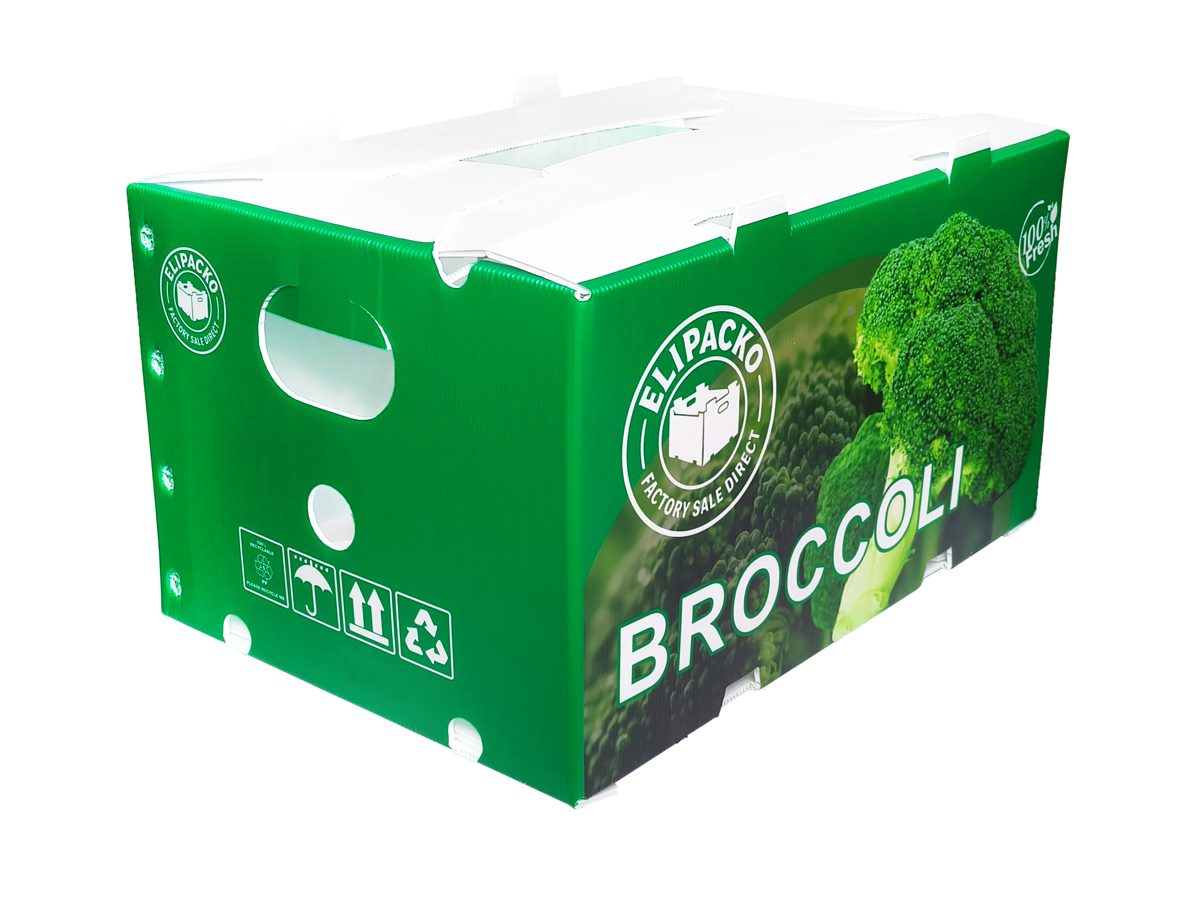
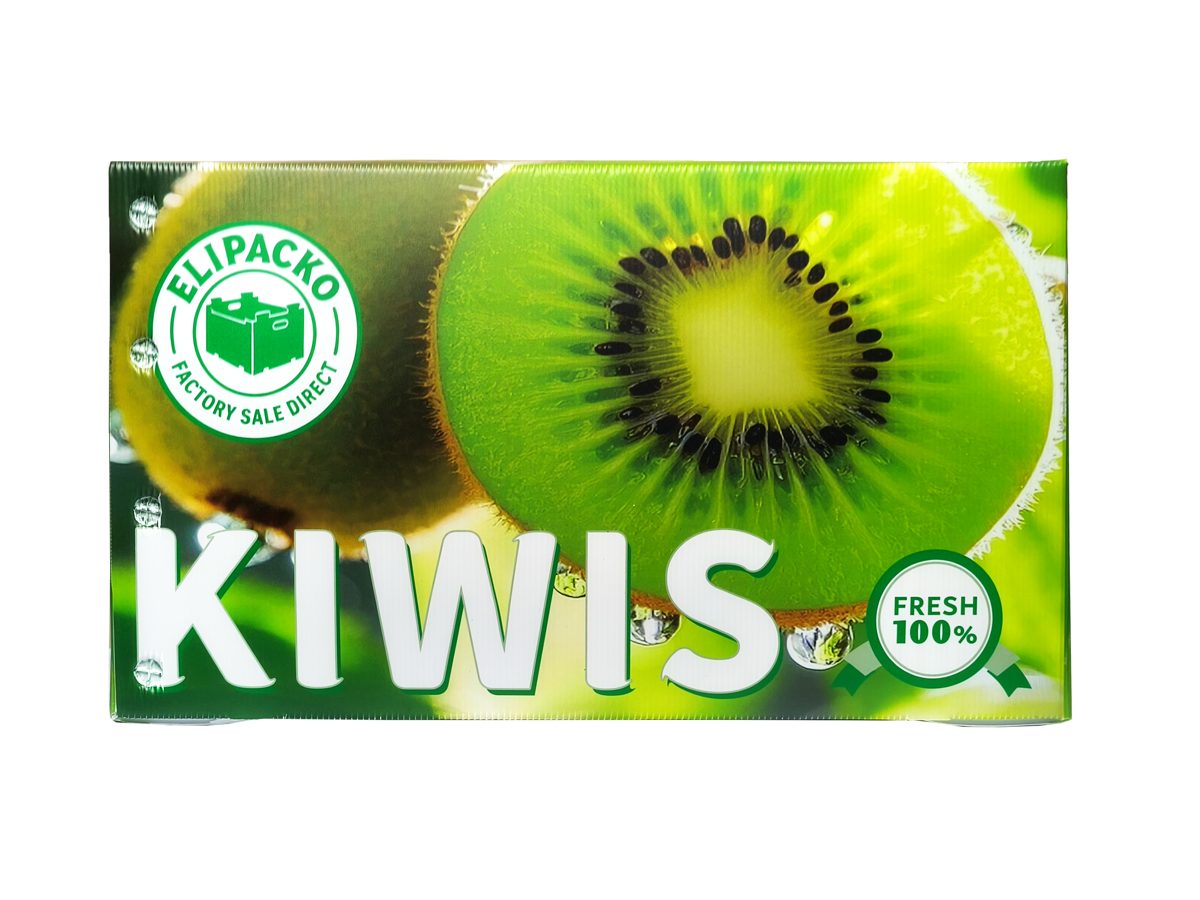
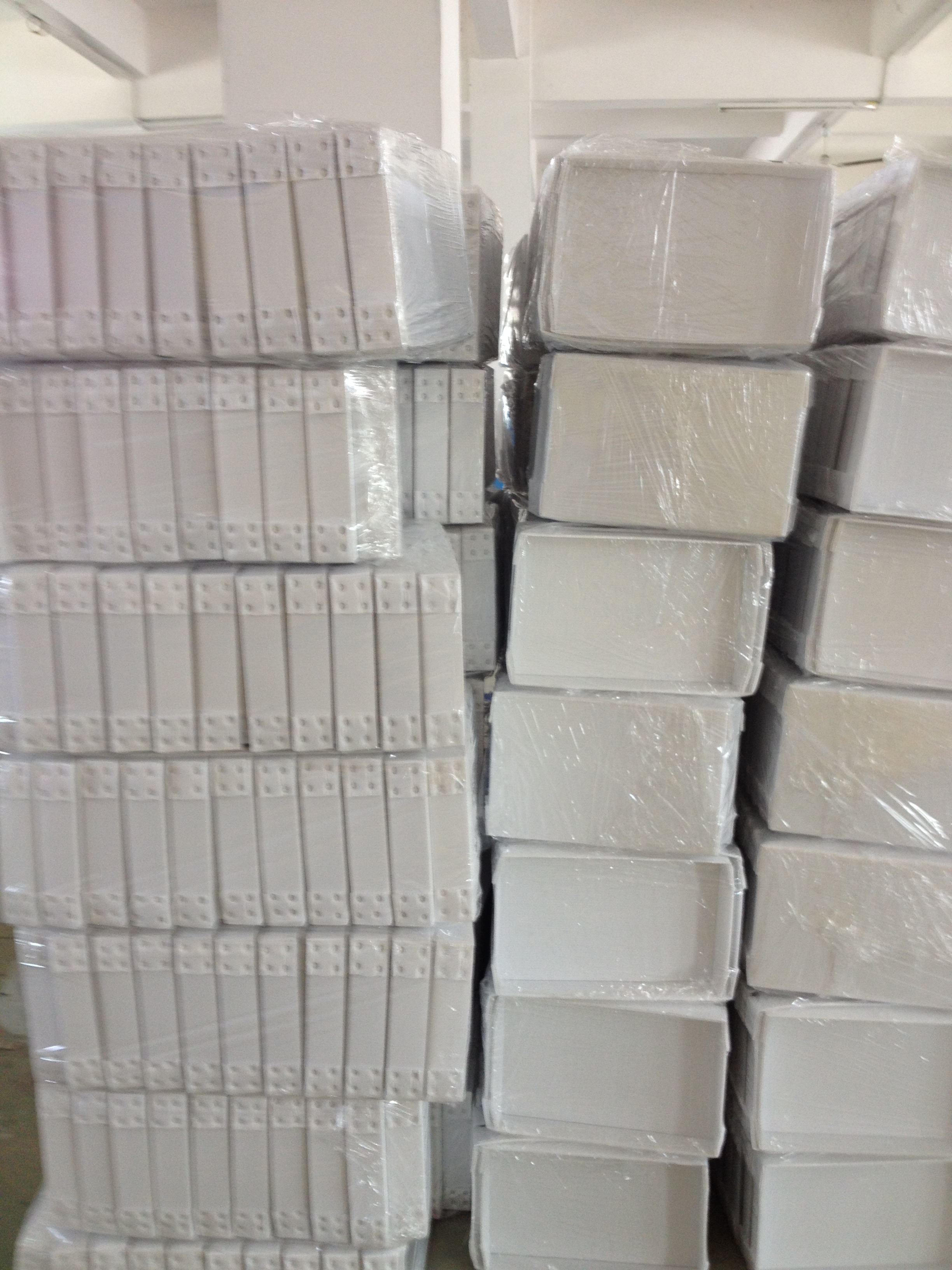
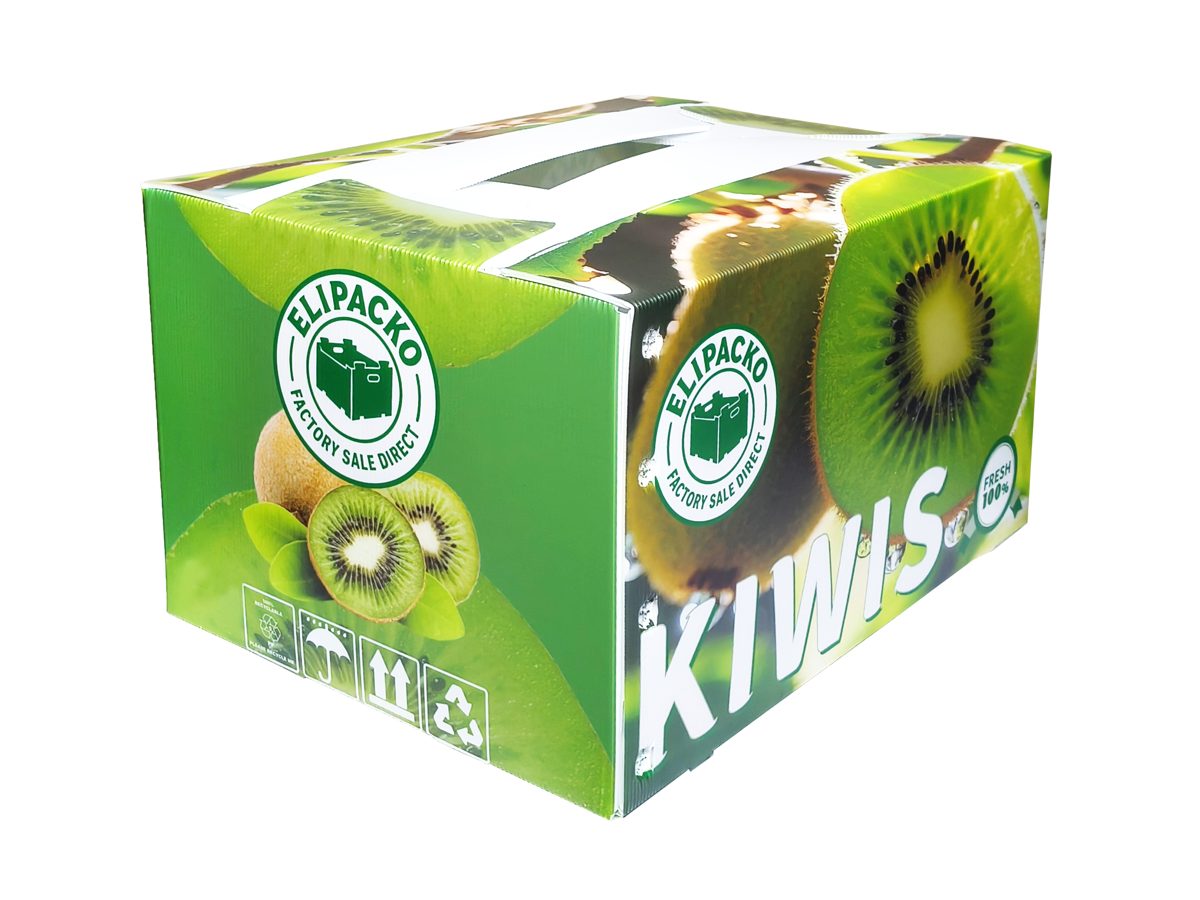
PP plastic bins and containers Plastic pallet containers in warehouse Bulk PP plastic container PP containers bulk industrial — warehouse Stackable PP containers — industrial storage PP container assembled — kiwi box — Elipacko

Industrial PP Containers Built for Real-World Supply Chains

Polypropylene gaylord boxes, produce crates, meat lugs, corrugated boxes, and pallets — engineered for food-grade performance, reuse, and total cost savings.

Request a Quote from Elipacko

At a Glance

50+
Reuse Trips Per Unit
#5
PP Resin Code — Fully Recyclable
FDA
21 CFR Food-Grade Compliant
–20°F
Blast-Freeze Capable (Copolymer)

Product Range

The Complete PP Container Lineup

Polypropylene has earned its position as the default material for industrial bulk and unit-load packaging — and for good reason. Whether you need a gaylord box capable of holding 1,200 lb of bulk ingredients, a stack of produce crates that can move from field to cold room to supermarket shelf without a single rupture, or meat lugs that pass repeated sanitation cycles without absorbing odors or harboring bacteria, PP containers deliver where cardboard and single-use packaging consistently fall short.

At Elipacko, we supply a full range of PP containers designed to fit within existing supply-chain infrastructure. Our containers align with standard pallet footprints, nest or stack for efficient return logistics, and are available in food-grade virgin resin formulations that meet FDA 21 CFR requirements out of the box.

Gaylord Boxes

PP gaylord boxes replace single-use cardboard bulk containers in applications ranging from dry-goods distribution to liquid-resistant agricultural bulk packing. Standard footprints of 40×48 in and 48×45 in match GMA pallets precisely, eliminating the overhang and edge compression failures seen with undersized cardboard gaylords. Wall thickness in the 3 to 5 mm range provides rigidity that cardboard achieves only with triple-wall construction — at a fraction of the lifespan.

A PP gaylord that completes 50 round trips replaces 50 cardboard boxes, reducing per-trip packaging cost by 60 to 80 percent depending on commodity pricing. The box does not absorb moisture, does not collapse in humid cold-storage environments, and does not shed fiber into food products — a recurring audit finding when paperboard is used in FDA-regulated facilities.

Produce Crates

PP produce crates are the workhorse of modern fresh-produce logistics. Their open-mesh or ventilated sidewall construction promotes air circulation, a critical factor in post-harvest temperature management. They are lightweight enough that workers can carry a full stack without ergonomic risk yet rigid enough to be stacked six to eight high in a refrigerated truck without deflecting.

Unlike single-use wax cardboard boxes, PP produce crates return to the packing house for washing and reuse. A crate washed with standard food-contact sanitizers at temperatures up to 180°F is fully restored to hygienic service — no fiber degradation, no wax delaminaton, no structural weakening. In a year-round operation, a reusable PP crate fleet pays back its acquisition cost in fewer than two growing seasons for most commodities.

Meat Lugs

Meat lugs operate in one of the most demanding environments in food manufacturing: ambient temperatures near freezing, aggressive USDA-mandated sanitizing chemicals, physical abuse from high-throughput processing lines, and regulatory scrutiny that tolerates no compromise on food-contact material compliance. PP meets every one of these demands.

Food-grade PP lugs molded from virgin FDA 21 CFR–compliant resin resist lactic acid, blood, and fat without staining, swelling, or off-gassing. Their smooth internal radii eliminate crevices that harbor biofilm, a requirement for HACCP compliance. Copolymer grades maintain toughness at blast-freeze temperatures as low as –20°F, allowing the same container to move from cutting room to blast cell to frozen storage without switching containers mid-process.

PP Corrugated Boxes & Pallets

Twin-wall PP corrugated boxes provide the folding, stackable format that cardboard boxes offer — combined with waterproof walls, reusability, and full color printability. They are specified in produce, seafood, and food-processing secondary packaging wherever condensation, wash-down, or repeated handling would destroy cardboard after a single use.

PP pallets round out the container system. A PP pallet in rackable or nestable configuration weighs 30 to 50 percent less than a wood pallet, does not harbor pests, requires no heat treatment for international trade compliance, and survives the same wash cycles as the containers it carries. For closed-loop supply chains, running a full PP system — pallet, gaylord, inner container — delivers the lowest total material cost per trip and the cleanest compliance profile.


Specifications

PP Container Specifications Overview

All specifications represent standard production ranges. Custom dimensions, wall thicknesses, colors, and resin grades are available. Contact Elipacko for project-specific engineering drawings.

Container Type Standard Footprint Capacity / Dimensions Wall Thickness Max Load Temp Range FDA 21 CFR
Gaylord Box (standard) 40×48 in 40×48×36 in 3.5–5 mm 1,200 lb –4°F to 212°F Yes (virgin resin)
Gaylord Box (bulk) 48×45 in 48×45×42 in 4–6 mm 1,500 lb –4°F to 212°F Yes (virgin resin)
Produce Crate (standard) 24×16 in 24×16×11 in 2.5–3.5 mm 55 lb –4°F to 180°F Yes
Produce Crate (large) 24×16 in 24×16×14 in 3–4 mm 70 lb –4°F to 180°F Yes
Meat Lug (standard) 26×17 in 26×17×8 in 4–5 mm 66 lb –20°F to 212°F (copol.) Yes
Meat Lug (deep) 26×17 in 26×17×12 in 4–5 mm 88 lb –20°F to 212°F (copol.) Yes
PP Corrugated Box Variable Custom / standard blanks 4–10 mm twin-wall Per design –4°F to 140°F Yes
PP Pallet (rackable) 48×40 in 48×40×6 in Structural rib design 2,200 lb rack –4°F to 140°F N/A

Material Science

Why Polypropylene Is the Right Material

Food Safety Without Compromise

Polypropylene holds a long-standing recognition under FDA 21 CFR 177.1520 for use as a food-contact material. When containers are molded from virgin, undyed PP resin, they meet the same compliance standard across the entire container family — gaylords, crates, lugs, corrugated boxes. There is no secondary testing burden, no regulatory ambiguity, and no certificate management headache that comes with multi-material assemblies.

PP does not leach plasticizers into food products under normal cold-chain or ambient distribution temperatures. It is BPA-free by composition — polypropylene has never contained bisphenol A. For food manufacturers operating under FSMA preventive control programs, PP containers support a clean materials-management record.

Lighter Than Comparable Containers

PP has a density of approximately 0.91 g/cm³, making it lighter than many competing rigid plastics. In bulk container applications, this translates into measurable freight savings on every truck, every lane, every year. A fleet of 1,000 PP gaylord boxes that each weigh 4 lb less than a single-use cardboard alternative saves thousands of pounds of tare weight per full truck-equivalent — weight that can be allocated to payload product instead.

The stiffness-to-weight ratio of PP is excellent, meaning thinner wall sections can achieve the same structural performance, further reducing unit weight without sacrificing compressive strength under stack loads.

Chemical Resistance Across the Supply Chain

PP containers encounter a wide range of substances across their service life: acids from fruits and meat, alkaline sanitizers, surfactant-based cleaners, and occasional contact with essential oils, fats, and solvents. PP's chemical resistance profile is broad — it resists most dilute acids, bases, alcohols, and aqueous solutions with minimal swelling, staining, or stress-cracking.

This resistance is not a coating or surface treatment that wears away. It is an inherent property of the polypropylene polymer. A PP gaylord on its 50th trip is chemically resistant for the same reason it was on its first trip — the bulk material properties do not change with repeated sanitation cycles.

Blast-Freeze Capable with Copolymer Grade

Homopolymer PP becomes brittle below approximately 32°F, which would limit its application in frozen food logistics. Copolymer PP — ethylene-modified polypropylene — maintains toughness and impact resistance at temperatures as low as –20°F. This is the grade specified for meat lugs, frozen-produce containers, and any application where containers pass through blast-freeze tunnels or enter frozen storage.

Specifying copolymer PP for your cold-chain containers eliminates the risk of in-service cracking, a failure mode that causes product contamination events, container loss, and costly cleanups. The slight premium over homopolymer resin is recovered within the first few freeze cycles compared with the alternative of damaged containers and downgraded product.

Recyclability and Sustainability

PP carries resin identification code #5 and is accepted by industrial recyclers across the United States. At end of service life, PP containers can be granulated and reprocessed into second-generation industrial products. For companies managing extended producer responsibility obligations or sustainability scorecards, a PP container fleet provides a documented recyclability credential that single-use cardboard, wax-coated boxes, and composite-material packaging cannot match on a comparable basis.

Total Cost of Ownership: The Reusable PP Advantage

A reusable PP container fleet is a capital investment, not a consumable expense. The per-trip cost calculation is straightforward: divide the unit acquisition cost by the number of service trips, then add per-trip washing and logistics costs. At 50 trips, the per-trip material cost of a PP gaylord is typically 70 to 85 percent lower than the cost of an equivalent single-use cardboard box — even after factoring in wash and return logistics.

Beyond direct cost, reusable PP containers reduce the labor associated with box assembly, disposal, and waste hauling. A processing facility that converts from cardboard gaylords to reusable PP gaylords typically eliminates one to two roll-off dumpster pickups per week, reduces cardboard baler maintenance intervals, and frees floor space previously occupied by flat-pack cardboard inventory. These secondary savings are real and measurable, even if they do not appear on the per-unit packaging line item.

Elipacko supports customers in transitioning to reusable PP container programs, including fleet sizing analysis, wash rack specification, return logistics design, and phased rollout planning. Contact our team at elipacko.com to start the conversation.

Benefits at a Glance


Frequently Asked Questions

Common Questions About PP Containers

Are PP containers compliant with FDA food-contact regulations?
Yes. Polypropylene is regulated under FDA 21 CFR 177.1520 as a food-contact material. When Elipacko containers are manufactured from virgin, undyed PP resin, they fully satisfy this standard. Containers manufactured for direct food contact come with documentation confirming resin compliance. Facilities operating under FSMA preventive controls should request resin compliance letters from their Elipacko sales contact.
How many times can a PP gaylord or crate realistically be reused?
Under normal service conditions — proper loading, standard warehouse handling, and routine wash cycles — PP containers regularly achieve 50 or more round trips. Individual units in well-managed closed-loop programs have logged over 100 trips. The limiting factor is typically physical damage from forklift impact or mishandling rather than material fatigue. Damaged units can often be repaired with plastic welding, extending service life further.
What temperature range can PP containers handle?
Standard homopolymer PP containers are rated for use from approximately –4°F to 212°F (–20°C to 100°C). Copolymer PP containers — recommended for blast-freeze and frozen storage applications — maintain structural integrity and impact resistance at temperatures as low as –20°F (–29°C). All Elipacko containers are labeled with their resin grade and temperature rating.
Can PP containers be washed in a commercial tunnel washer?
Yes. PP containers are compatible with commercial tunnel washers operating at temperatures up to 180°F using standard food-contact sanitizers including quaternary ammonium compounds, sodium hypochlorite solutions, peracetic acid blends, and alkaline detergents. PP does not absorb water, does not swell, and does not degrade surface smoothness under repeated wash cycles, maintaining its hygienic profile throughout its service life.
What is the minimum order quantity for custom PP containers?
Minimum order quantities depend on the container type, whether tooling is required, and the level of customization. Standard catalog items are available in smaller quantities. Custom dimensions, colors, and printed graphics typically require a minimum quantity of 500 to 1,000 units depending on tooling amortization. Contact Elipacko at elipacko.com to discuss your specific project requirements and receive a detailed quotation.
Are PP containers recyclable at end of service life?
Yes. Polypropylene carries resin identification code #5 and is recyclable through industrial recycling streams. When a PP container fleet reaches end of service life, the material can be granulated and processed into secondary resin for non-food industrial applications. This provides a documented recyclability pathway that supports corporate sustainability reporting and extended producer responsibility (EPR) compliance programs.
Do PP containers nest for return logistics?
Most PP container designs in the Elipacko range incorporate nesting capability, allowing empty containers to stack within one another at a 3:1 or better ratio compared with the filled stacking height. This significantly reduces the cube required for empty returns, cutting return freight costs and improving trailer utilization on backhaul lanes. Gaylord boxes are typically collapsible or nestable depending on design; crates and lugs are typically solid-wall nestable.
How do I get a quote for a PP container fleet?
Visit elipacko.com or click the "Get a Quote" button at the top of this page. Our team will follow up to discuss container type, dimensions, volume, resin grade requirements, any food-contact compliance documentation needed, and lead time. Fleet sizing support, ROI modeling, and sample containers are available for qualified projects.

Ready to Switch to Reusable PP Containers?

Talk to the Elipacko team about gaylord boxes, produce crates, meat lugs, and corrugated PP boxes for your operation. Food-grade, FDA-compliant, built to last 50+ trips.

Get a Quote at Elipacko.com